




Horses require specialized veterinary care that goes well beyond what a general large animal practice can offer. Whether you’re managing a single horse or a working barn, understanding what comprehensive equine veterinary services look like — and what distinguishes clinic-based care from ambulatory field work — helps you make better decisions when your horse needs attention.
Routine Care and Preventive Medicine
Consistent preventive care is the foundation of equine health management. This includes:
Annual wellness exams — A thorough physical evaluation catches developing dental problems, weight and body condition changes, and early signs of systemic issues before they become emergencies. Many problems that present acutely in horses have been developing quietly for months.
Vaccination protocols — Core vaccines (Eastern/Western equine encephalomyelitis, tetanus, West Nile virus, rabies) are essential for every horse in Ohio. Risk-based vaccines (influenza, rhinopneumonitis, strangles) depend on your horse’s exposure and travel. A veterinarian familiar with regional disease patterns helps you build the right annual protocol.
Dental care — Horses’ teeth erupt continuously throughout their lives, and sharp points, hooks, and uneven wear cause significant problems with eating and bit contact. Annual floating (rasping) and regular dental exams are standard care, not optional maintenance.
Parasite management — Modern deworming protocols focus on targeted treatment based on fecal egg counts rather than routine blanket deworming. This approach is more effective and reduces the development of anthelmintic resistance in parasite populations.
Lameness Evaluation and Diagnostics
Lameness is one of the most common and consequential problems in horses — a subtle gait abnormality today can become a career-ending injury if misdiagnosed or mismanaged. Proper lameness evaluation involves systematic observation at walk and trot, flexion tests, nerve and joint blocks to localize the source, and diagnostic imaging (radiographs, ultrasound) to characterize the lesion.
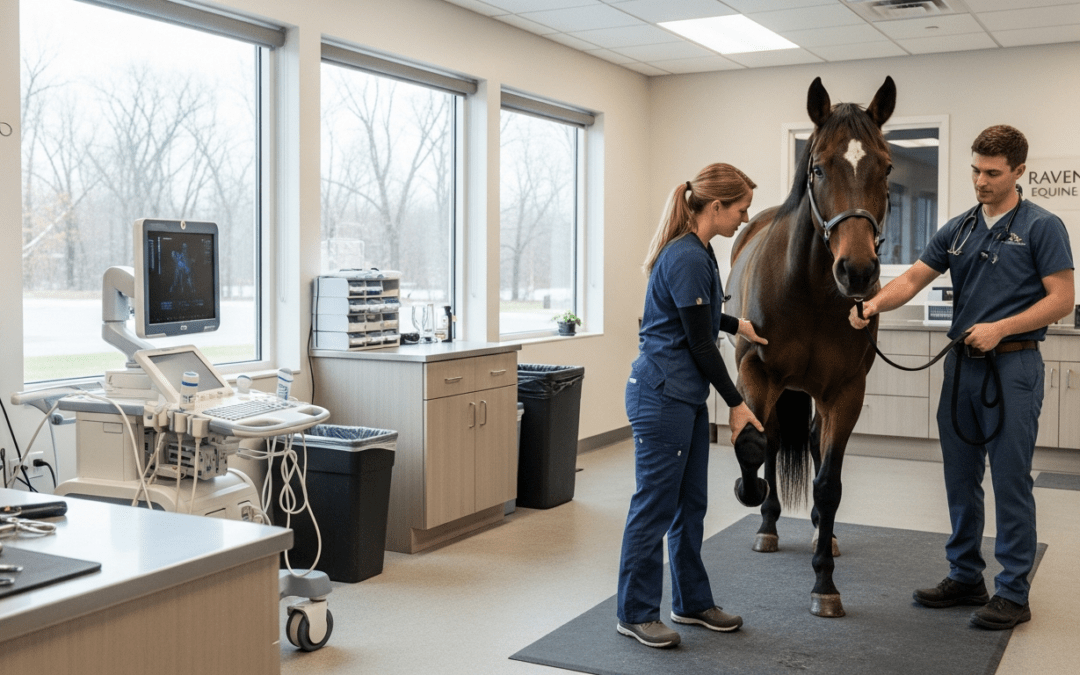
Modern equine practices have access to digital radiography and portable ultrasound equipment that can be used both at the clinic and in the field. For complex lameness cases, MRI and CT imaging provide resolution that isn’t possible with conventional equipment — particularly for foot and lower limb problems that remain undiagnosed after standard workup.
Emergency and Ambulatory Services
Colic is the leading cause of death in horses, and it’s a true emergency. A practice with 24/7 emergency availability is essential for any horse owner — colic cases that appear mild can deteriorate rapidly, and early veterinary intervention significantly affects outcomes.
Ambulatory services — veterinarians who come to your farm — are appropriate for routine work and field emergencies. For cases requiring surgery, intensive monitoring, or advanced diagnostics, a clinic facility with surgical capability and intensive care support is necessary.
Equine Veterinary Care in Northeast Ohio
For comprehensive equine veterinary care — wellness exams, lameness evaluation, dentistry, emergency services, ambulatory farm calls, and surgical referral — Cleveland Equine Clinic serves horse owners throughout Northeast Ohio from their facility in Ravenna.
Call (330) 422-0040 to schedule an appointment or reach the emergency line.