




Veterinary emergencies don’t follow business hours. Knowing where to go, what to expect when you arrive, and what signs require immediate care versus a next-day appointment can make a significant difference in your pet’s outcome — and in the stress of an already difficult situation.
Signs That Require Emergency Veterinary Care
Some situations are unambiguously urgent. Go directly to an emergency clinic if your pet shows any of the following:
Breathing difficulty — labored breathing, open-mouth breathing in a cat, blue or white gums, or gasping
Suspected poisoning — ingestion of xylitol, grapes/raisins, chocolate, medications, rat poison, antifreeze, or any unknown substance
Trauma — hit by a vehicle, fall from height, animal attack, or any impact that may have caused internal injury even if the pet appears initially okay
Seizures — first-time seizure, seizure lasting more than two minutes, or multiple seizures within 24 hours
Bloat/GDV — a distended abdomen, unproductive retching, and restlessness in a dog (particularly deep-chested breeds) is a life-threatening emergency
Urinary obstruction — a cat that is straining to urinate, crying in the litter box, or producing little to no urine is in crisis
Collapse or extreme weakness — sudden inability to stand or walk, pale gums, cold extremities
Uncontrolled bleeding — wounds that won’t stop bleeding with direct pressure, or internal bleeding suspected after trauma
Eye injuries — sudden cloudiness, pawing at the eye, prolapsed tissue, or penetrating injury
What to Expect at an Emergency Clinic
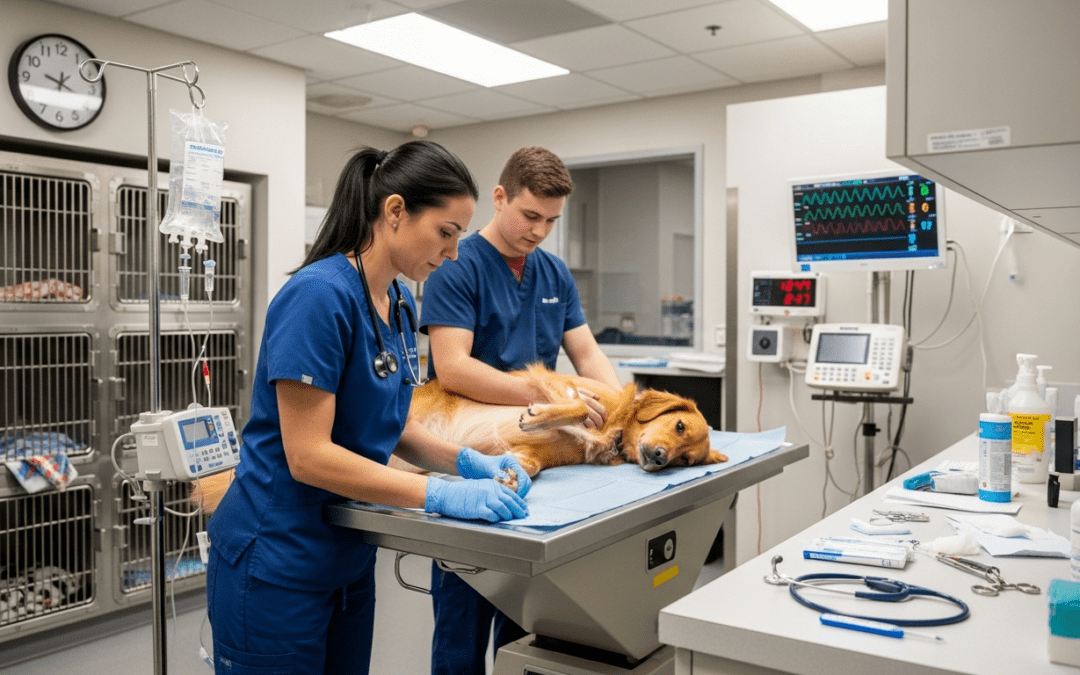
Emergency veterinary practices operate differently from primary care. Patients are triaged on arrival by severity — a pet in respiratory distress or active shock will be seen before a stable patient with a laceration, regardless of arrival order. This is appropriate and protects the most critical cases, but it means wait times for less urgent emergencies can vary.
When you arrive, the staff will take a brief history and assess your pet’s stability. If hospitalization, oxygen support, IV fluids, or monitoring are needed, these begin quickly. The veterinarian will discuss findings and treatment options with you before proceeding with anything beyond stabilization.
Having your pet’s current medication list and any known medical history available speeds up the intake process, particularly for older pets on multiple medications.
After-Hours Emergency Care in Canton
For 24-hour emergency veterinary care in the Canton, Akron, and surrounding Stark County area, Stark County Veterinary Emergency Clinic at 4303 Whipple Ave NW in Canton provides around-the-clock emergency services for dogs, cats, and other companion animals.
Call ahead if possible at (330) 452-5116 so the team can prepare for your arrival.