



Maintenance Prevents Costly Repairs
Your vehicle is a major investment requiring regular care to maintain reliability and value. Routine maintenance prevents expensive repairs, extends vehicle lifespan, maintains manufacturer warranty coverage, and ensures safety. Yet many drivers ignore maintenance until problems force expensive emergency repairs. Understanding essential maintenance and following manufacturer recommendations keeps your vehicle running smoothly for years.
Essential Routine Maintenance
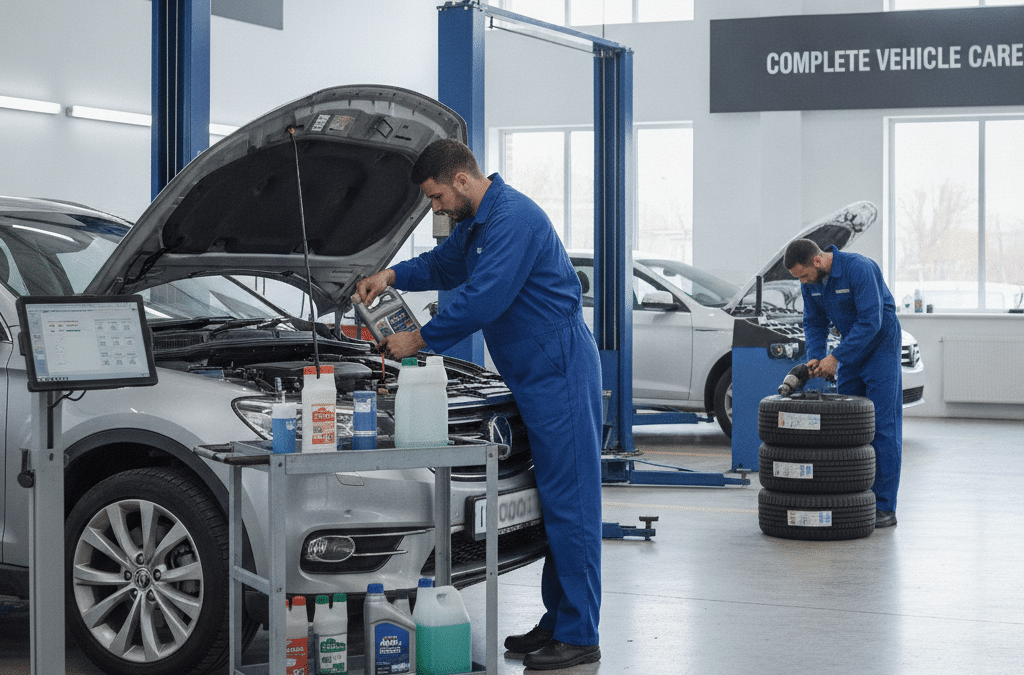
Oil Changes Regular oil changes are the single most important maintenance task. Clean oil lubricates engine components, removes contaminants, and prevents engine wear. Follow your vehicle’s recommended oil change interval—typically 5,000-7,500 miles or 6 months for conventional oil, 7,500-10,000 miles for synthetic. Neglecting oil changes dramatically accelerates engine deterioration.
Tire Maintenance Properly inflated tires improve fuel efficiency, handling, and safety. Check tire pressure monthly when tires are cold. Rotate tires every 5,000-8,000 miles to ensure even wear. Alignment maintenance prevents premature tire wear. Replace tires when tread depth reaches 2/32 inch—at this point, traction significantly diminishes, especially in wet conditions.
Fluid Checks and Changes Beyond oil, your vehicle uses multiple critical fluids: coolant, brake fluid, power steering fluid, and transmission fluid. Each requires periodic inspection and replacement. Low or dirty fluids impair performance and damage components. Follow manufacturer recommendations for fluid service intervals.
Filter Replacements Air filters prevent debris from damaging your engine. Cabin air filters improve interior air quality. Fuel filters protect your fuel system. Replace filters according to manufacturer schedules—typically annually or every 12,000-15,000 miles, depending on driving conditions.
Brake Service Brakes are safety-critical. Worn brake pads reduce braking effectiveness and can damage rotors. Have brakes inspected annually. Replace pads when they approach minimum thickness. Brake fluid should be flushed according to manufacturer intervals to maintain performance.
Battery Health Car batteries typically last 3-5 years. Have your battery tested annually after 3 years. Clean corrosion from terminals. Replace batteries before failure to avoid being stranded. Cold weather reduces battery effectiveness—have your battery checked before winter.
Seasonal Maintenance
Spring Maintenance After winter, inspect undercarriage for salt damage. Check exterior lighting and windshield wipers. Test air conditioning before summer heat. Wash undercarriage to remove winter salt.
Summer Maintenance Check tire tread and pressure regularly—heat increases tire pressure. Inspect cooling system capacity and hose condition. Protect paint with regular washing and waxing. Check air conditioning refrigerant level.
Fall Maintenance Prepare for winter driving. Check battery health and condition. Inspect brakes thoroughly. Top off windshield washer fluid. Consider winter tire installation if you live in heavy snow areas.
Winter Maintenance Use appropriate winter washer fluid with antifreeze. Check windshield wipers regularly. Keep emergency supplies in your vehicle. Have battery and starting system tested before cold weather arrives.
When to Schedule Professional Service
Some maintenance requires professional expertise:
- **Transmission service** (flushing and fluid replacement)
- **Cooling system flushing** (prevents corrosion and overheating)
- **Brake system inspection and service**
- **Wheel alignment** (especially after hitting potholes or curbs)
- **Suspension inspection** (worn shocks affect handling and safety)
The Cost of Neglect
Skipping maintenance seems like short-term savings but costs far more long-term:
- Engine problems from poor oil maintenance can exceed $5,000
- Brake failure is dangerous and expensive
- Transmission damage from neglected fluid service costs $4,000-$8,000+
- Rust from ignored undercarriage maintenance destroys vehicles
Regular maintenance costing $500-$1,000 annually prevents catastrophic repairs costing thousands.
Create Your Maintenance Schedule
Review your vehicle’s owner manual for manufacturer recommendations. Create a maintenance calendar noting when each service is due. Stick to the schedule religiously. Consistent maintenance is far more cost-effective than emergency repairs.
Ken’s Auto Service Center provides comprehensive maintenance services keeping your vehicle reliable, safe, and valuable. From oil changes to major service, professional maintenance ensures your vehicle performs at its best.
Regular Maintenance = Reliable Vehicle
Your vehicle’s reliability depends on consistent maintenance. Follow manufacturer recommendations, address problems promptly, and work with trusted service professionals. The time and money invested in maintenance now saves far more later—ensuring your vehicle runs reliably for years.