




DIY Automotive Jacks and Lifts: Essential Tools for Safe Car Maintenance and Repairs
Work Safely on Your Vehicle with Professional-Grade Equipment
Whether you’re changing oil, replacing brake pads, or performing more complex repairs, proper lifting equipment is essential for safety and access. Professional-grade automotive jacks and lifts make work safer, faster, and more comfortable. Understanding equipment types and safety practices helps DIY mechanics and home garage operators work confidently without compromising safety.
Why Proper Lifting Equipment Matters
Safety is Non-Negotiable
Inadequate lifting equipment causes serious injuries and death. Vehicle weight is substantial—a car can weigh 3,000-4,000 pounds. Working under an improperly supported vehicle risks crushing injuries. Professional equipment supports vehicles securely throughout any repair.
Improved Access and Comfort
Proper lifts position vehicles at comfortable working heights, reducing back strain. Adequate undercarriage clearance allows work that would be impossible at ground level. Working in comfort reduces mistakes and allows longer work sessions.
Faster Repairs
With proper equipment, repairs that take hours in awkward positions take minutes in comfortable positions. Better positioning and visibility speeds diagnosis and repair. Time savings make the equipment investment worthwhile.
Extended Equipment Life
Proper lifts support vehicle weight safely, preventing strain on equipment. Overloading or improperly using equipment causes failure and creates safety hazards. Quality equipment used properly lasts decades.
Types of Automotive Lifting Equipment
Floor Jacks
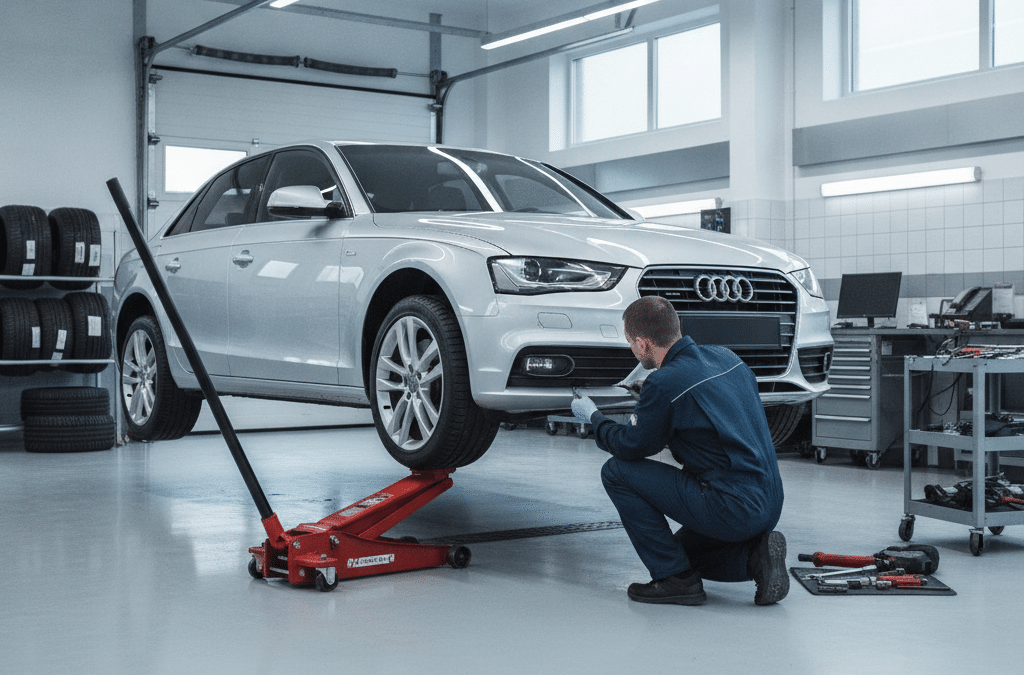
Floor jacks use hydraulic pressure to lift vehicles from a single point. Capacity ranges from 2 to 20 tons. They’re portable, affordable, and fast for quick lifts. Always use jack stands for support—never work under a vehicle supported only by a jack.
Jack Stands
Jack stands support vehicle weight while you work. They’re essential safety equipment used in pairs or more. Capacity ranges from 2 to 12 tons. Quality stands have stable bases and secure load points. Always use stands as the primary support system.
Two-Post Lifts
Two-post lifts raise entire vehicles with symmetric posts on each side. They’re common in home and professional garages. Capacity ranges from 9,000 to 18,000 pounds. They’re permanent installations requiring proper floor and ceiling height. Two-post lifts provide safe access to all undercarriage areas.
Four-Post Lifts
Four-post lifts support vehicles at all four corners, providing maximum stability. Capacity ranges from 8,000 to 14,000 pounds. Some include alignment pads for tire work. Four-post lifts are safer for extended work sessions and heavy repairs.
Scissor Jacks
Scissor jacks use crossed arms to lift. They’re compact and portable. Capacity is lower than hydraulic jacks (typically 2-3 tons). They’re slower and require more manual effort. Scissor jacks work for light duty use and emergency tire changes.
Motorcycle/ATV Jacks
Specialized jacks support motorcycles and ATVs at their frames, not wheels. Capacity ranges from 500 to 2,000 pounds. Proper placement is critical—improper placement damages bikes. Motorcycle-specific equipment prevents expensive damage.
Pneumatic/Air Jacks
Air-powered jacks use compressed air for smooth, controlled lifting. They’re fast and powerful. They require an air compressor and proper fittings. They’re popular in professional shops for efficiency.
Essential Safety Practices
Always Use Multiple Support Points
Never rely on a single jack. Always place jack stands under the vehicle before working beneath it. Use additional support for complete security. Multiple points prevent catastrophic failure if one fails.
Check Weight Capacity
Know your vehicle’s weight and ensure equipment capacity exceeds it significantly. Account for added weight from tools, fuel, and passengers when calculating load. Always leave a safety margin—don’t use equipment at its maximum rated capacity.
Inspect Equipment Before Use
Check jacks and stands for damage, rust, or wear before each use. Damaged equipment fails under load. Regular inspection prevents catastrophic failure during use.
Use Proper Lifting Points
Vehicles have reinforced areas designed for lifting. Use manufacturer-recommended lift points. Improper placement can damage vehicles and cause slipping. Owner’s manuals show correct lift point locations.
Work on Level Ground
Always lift on level, solid ground. Uneven surfaces cause tipping and slipping. Concrete is ideal; grass or gravel is unsafe. Clear debris and ensure stable footing.
Keep Bystanders Away
Don’t allow children or pets near work areas. Vehicles shifting or equipment failing could cause serious injury. Establish a clear work zone and keep bystanders away.
Wear Appropriate Clothing
Avoid loose clothing that could get caught in equipment or mechanisms. Wear closed-toe shoes for protection. Remove jewelry that could snag or conduct electricity.
Never Go Under an Improperly Supported Vehicle
This cannot be overemphasized: don’t go under a vehicle supported only by a jack. Always use jack stands or other secondary support. Equipment failures happen—secondary support saves lives.
Choosing Equipment for Your Needs
Home Garage and DIY Work
A quality floor jack paired with sturdy jack stands suffices for most home maintenance. For frequent use, consider a two-post lift for convenience and safety. Ensure adequate ceiling height and floor strength for permanent installations.
Professional Shop Requirements
Professional shops typically need multiple lifts for efficiency. Two-post and four-post lifts enable continuous work on multiple vehicles. Alignment equipment and specialized jacks increase efficiency.
Storage and Space
Portable jacks require minimal storage space. Permanent lifts require dedicated installation and adequate clearance. Consider your space constraints when choosing equipment.
Budget Considerations
Quality portable equipment costs $200-$1,000. Permanent lifts cost $3,000-$15,000 installed. The investment pays back through time savings and professional capability. Don’t compromise on safety for budget.
Professional Automotive Equipment
Torque Jack Pro supplies professional-grade automotive jacks, lifts, and lifting equipment for home shops, dealerships, and repair facilities. From portable floor jacks to permanent shop lifts, our equipment meets safety standards and provides reliable performance for years. Expert guidance ensures you choose the right equipment for your applications and needs.
Work Safely with Proper Equipment
Professional-grade lifting equipment is essential for safe, efficient automotive work. Proper equipment enables confident repairs, prevents injuries, and extends your capability. Whether you’re a weekend warrior or professional mechanic, investing in quality lifting equipment and practicing proper safety ensures years of productive, injury-free work on your vehicles.