




Residential Water Well Drilling: What Homeowners Should Know About Installing a New Well
Drilling a New Water Well: A Homeowner’s Guide
Whether you’re building a new home, replacing a failed well, or seeking independence from municipal water, well drilling is a major undertaking. Modern well drilling technology makes the process straightforward and reliable, but understanding the process, costs, and considerations helps you make informed decisions. A properly drilled and maintained well provides decades of clean, dependable water for your family.
Why Choose a Private Water Well
Independence from Municipal Water
Private wells free you from municipal water restrictions and rate increases. You control your water supply and have redundancy if municipal systems fail.
Potential Cost Savings
After initial installation, well water costs only the energy to pump it. No monthly water bills or municipal fees. Over decades, savings can be substantial.
Water Quality Control
You manage your water quality directly. Testing and treatment customized to your specific water characteristics. No concerns about municipal water decisions affecting your supply.
Adequate Supply for Large Properties
Properties with significant water needs (large landscaping, livestock, irrigation) benefit from unlimited well water. Municipal systems impose usage restrictions wells don’t have.
The Well Drilling Process
Site Assessment and Permits
Before drilling begins, professionals survey your property to identify the best location. Hydrogeologists assess groundwater availability and depth. Local permits ensure compliance with well codes and setback requirements from wells, septic systems, and pollution sources.
Well Design
Well design depends on soil conditions, groundwater depth, and water needs. Shallow wells suit areas with water tables close to surface. Deep wells reach water in areas with deeper water tables. Professional assessment determines the best approach.
Drilling Equipment
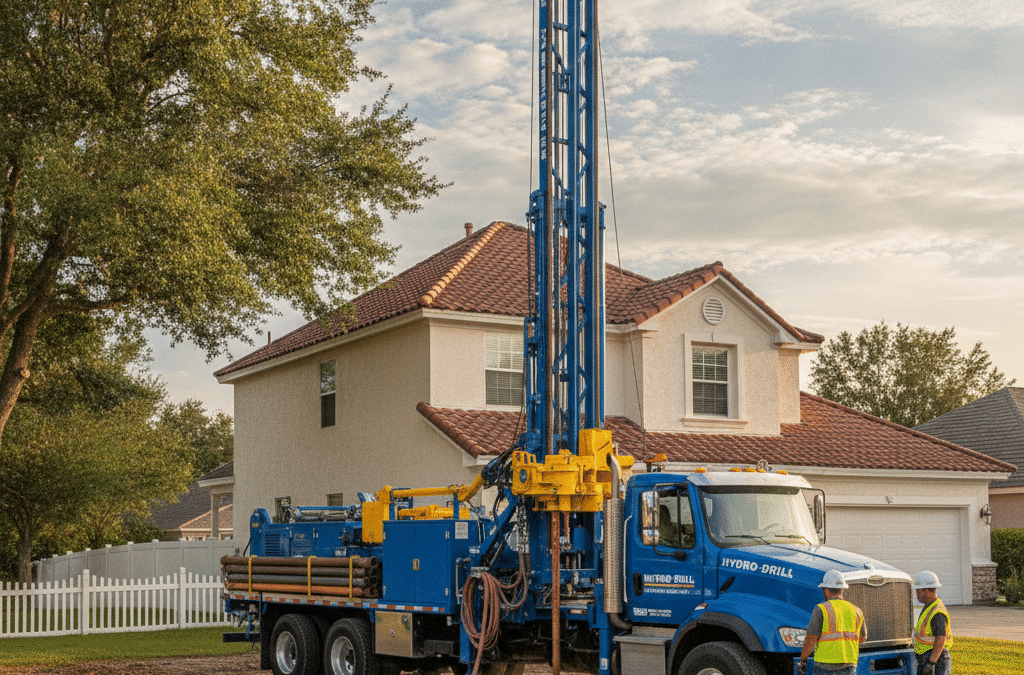
Modern rotary drilling rigs bore holes efficiently through various soil layers. The drill bit advances while drilling fluid cools the bit and removes cuttings. Continuous monitoring ensures proper drilling depth and angle.
Casing Installation
Steel or PVC casing lines the well bore, preventing collapse and contamination. Casing extends above ground to prevent surface water infiltration. Proper casing installation is critical for well longevity.
Gravel Packing and Sealing
Gravel packing around the casing improves water flow into the well. Above the water table, clay sealant prevents surface water and contaminants from entering. Professional sealing is essential for water safety.
Well Development
After drilling, the well is developed by pumping and cleaning to remove drilling sediment. Development improves water flow and water clarity. Proper development ensures the well performs optimally.
Testing and Certification
The finished well is tested to ensure it produces adequate volume and quality water. Professional testing ensures compliance with state and local requirements. Well certification documents the successful installation.
Choosing a Well Drilling Contractor
Experience and Licensing
Choose contractors licensed and experienced in well drilling. Experience indicates knowledge of local geology, proper techniques, and regulatory compliance. Ask for references from previous projects.
Permit Knowledge
Reputable contractors handle permit applications and ensure compliance with local codes. They understand setback requirements and inspection requirements.
Equipment and Technique
Quality contractors invest in modern equipment and use proven techniques. Equipment quality affects drilling efficiency and well integrity.
Written Estimates
Get detailed written estimates including drilling depth, casing type, grouting, development, and testing. Clear estimates prevent surprises during the project.
Warranty and Support
Quality drillers warranty their work and provide follow-up support. Warranties typically cover drilling and initial equipment for specified periods.
Well Drilling Costs
Drilling Depth
Deeper wells cost more to drill. Shallow wells in areas with water tables 25-50 feet deep cost less than deep wells requiring 200+ feet of drilling.
Soil Conditions
Hard rock requires more drilling time and expense. Soil with rocks or hard clay layers increases costs. Hydrogeologic assessment provides depth and cost estimates.
Casing and Completion
Casing, gravel, sealing materials, and testing add to drilling costs. Proper completion ensures well longevity and safety.
Well Pump System
Submersible pumps, pressure tanks, and delivery lines add to system costs. Pump size depends on water demand and depth.
Typical Costs
Residential well drilling typically costs $3,000-$15,000+ depending on depth and conditions. Shallow wells cost less; deep wells more. Request detailed estimates from multiple contractors.
Maintenance After Installation
Water Testing
Test new well water for bacteria, minerals, and contaminants. Annual testing ensures ongoing safety. More frequent testing addresses specific concerns.
Pump Maintenance
Professional pump service annually keeps your system running. Maintenance extends pump life and prevents failures.
Inspection
Annual inspection of casing, seals, and caps identifies potential problems. Early detection prevents water quality issues.
Treatment System Maintenance
Water softeners, filters, or other treatment systems require periodic service. Proper maintenance keeps systems effective.
Professional Water Well Drilling
Adams & Sons Pump Service provides expert water well drilling, installation, and service to Canton and surrounding areas. Our experienced drillers use modern equipment to install quality wells properly. From site assessment through testing and certification, we handle every step professionally.
Invest in a Reliable Water Supply
A properly drilled well provides decades of dependable water for your home or business. Professional drilling using proven techniques ensures your investment lasts. Whether replacing a failed well or installing new, expert drilling services deliver the quality and reliability you need.