
Getting into an accident — even a minor one — is disorienting. Knowing what to do in the immediate aftermath and what to expect from the collision repair process removes a lot of the stress and helps you avoid common mistakes that complicate insurance claims or result in substandard repairs.
At the Scene
Document everything before the vehicles move. Photos of both vehicles from multiple angles, the road conditions, any visible damage, license plates, and the surrounding environment are all useful. If there are injuries or significant damage, call the police — an official report strengthens your insurance claim and creates an objective record of what happened.
Exchange insurance information, license numbers, and contact information with the other driver. If there are witnesses, get their contact information too.
Don’t admit fault — even casually. What feels like a polite acknowledgment at the scene can be used against you in the claims process. Stick to factual descriptions and let the insurance companies determine liability.
Filing the Insurance Claim
You can file with your own insurance company (which then pursues the at-fault party’s insurer) or directly with the at-fault driver’s insurer. Either way, document the damage thoroughly before any repair work begins — additional photos at home, from multiple angles and lighting conditions, are worth taking.
In Ohio, you have the right to choose your own repair shop. Insurance companies may recommend their “preferred” shops, but those preferences benefit the insurer’s cost structure, not necessarily repair quality. You are not required to use them.
What a Professional Collision Repair Involves
Quality collision repair is more than making a car look right — it’s restoring structural integrity and safety systems to pre-accident condition.
Frame and structural assessment — Modern vehicles use unibody construction where the frame and body are integrated. Even a moderate-speed rear impact can affect structural alignment in ways that aren’t visible but affect handling and crash protection. A proper repair begins with frame measurement and, where necessary, precision straightening using computerized equipment.
Paint matching — A quality repaint on damaged panels should be invisible after the fact. This requires color analysis, multiple-stage paint application, and clear coat work that matches the factory finish. A shop cutting corners on paint will show color variation within a year.
Airbag and safety system inspection — Any impact sufficient to deploy airbags, or even a significant collision that didn’t, should include a scan of the vehicle’s safety system modules. Sensors and control units can be affected in ways that aren’t obvious but leave airbags or stability systems non-functional.
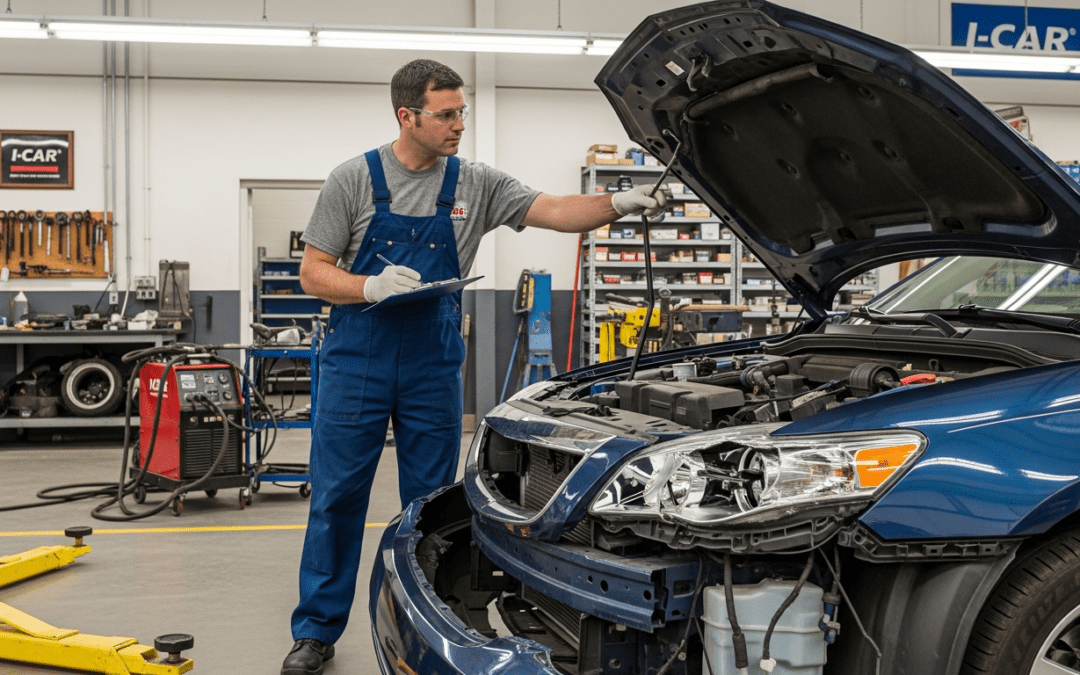
I-CAR certification — I-CAR (Inter-Industry Conference on Auto Collision Repair) is the collision repair industry’s professional training standard. Technicians with I-CAR training are current on repair procedures for modern vehicle construction, including aluminum body panels, advanced high-strength steels, and driver assistance systems.
Choosing a Repair Shop in the Akron Area
For drivers in the Hudson, Akron, and greater Summit County area, Hudson Collision Center is a family-owned, I-CAR certified collision repair shop with over 30 years of experience in auto body repair, frame straightening, paint, and glass.
Call their Akron location at (330) 650-0077 or their Cleveland-area location at (330) 656-1661 to schedule an estimate.