




Posting Site: ohioexcitement.com
Target Keyword: equine colic Ravenna Ohio
Understanding Colic: The Most Common Emergency in Horses
For horse owners in Northeast Ohio and the Ravenna area, understanding equine colic could save your horse’s life. Colic—abdominal pain in horses—is the leading cause of emergency veterinary visits in the equine world, and it remains one of the most serious health challenges horse owners face.
Unlike humans who can describe exactly where and how they hurt, horses can’t communicate the specifics of their pain. Instead, horse owners must recognize behavioral changes and physical signs that indicate their horse is experiencing colic—and understand when immediate veterinary care is critical.
What Is Colic and Why Is It So Serious?
Colic is a blanket term for any abdominal pain in horses. It can range from mild discomfort that resolves with home management to life-threatening emergencies requiring surgery. The challenge for horse owners is determining whether their horse’s colic is something they can manage or whether they need emergency veterinary intervention.
Several factors make equine colic particularly serious:
Horses cannot vomit: Unlike humans, horses lack the abdominal muscles that allow vomiting. This means if the intestines become blocked or twisted, the material backs up into the stomach and can rupture, which is almost always fatal.
Rapid deterioration: A horse may seem only mildly uncomfortable and then dramatically worsen within minutes or hours.
Shock and complications: Severe colic can lead to shock, organ failure, and death even with veterinary treatment if intervention is delayed.
Surgical urgency: Some types of colic require surgery, and delays can reduce survival rates.
Recognizing Colic: Signs Every Horse Owner Should Know
Early recognition of colic symptoms is crucial. Watch for these signs:
Abdominal discomfort: Your horse may look back at its sides, bite or kick at the belly, or show generalized restlessness and anxiety.
Rolling and lying down repeatedly: Horses often roll in an attempt to relieve pain. Rolling in stalls is particularly concerning because it can cause twisted intestines or other complications.
Loss of appetite: If your horse refuses feed or water, particularly grain, colic is a possibility.
Reduced or absent manure production: This indicates reduced intestinal movement.
Sweating: Profuse sweating, even when not exercising, is a sign of significant pain.
Change in behavior: Lethargy, depression, or unusual aggression can all indicate abdominal distress.
Elevated heart rate: A normal horse resting has a heart rate of 30-40 beats per minute. Colic typically elevates this significantly.
Dehydration: Dry gums or prolonged skin turgor (skin doesn’t snap back quickly when pinched) indicate dehydration.
Mild vs. Severe Colic: Making the Call
Not all colic requires emergency veterinary care, but determining the difference requires experience and judgment.
Mild colic often resolves with:
- Gentle walking and movement (which encourages intestinal movement)
- Temporarily withholding feed
- Continued access to water
- Monitoring
- Severe distress or violent rolling
- Rapid, significant heart rate elevation
- Shock signs (pale gums, cold extremities, weak pulse)
- Non-responsive behavior
- Persistent, severe pain lasting more than 30 minutes despite walking and minimal intervention
- Persistent abdominal pain lasting more than 15-20 minutes despite walking
- Violent rolling or extreme distress
- Any of the severe colic signs listed above
- Uncertainty about your horse’s condition
However, even mild-seeming colic can escalate, so continued observation is essential.
Severe colic signs that warrant immediate emergency veterinary care include:
Prevention: The Best Medicine
While not all colic can be prevented, several management practices reduce risk:
Consistent routine: Horses thrive on routine. Sudden changes in feed, turnout, or exercise can trigger colic.
High-quality forage: Horses should consume hay as the foundation of their diet. Poor-quality hay or sudden changes in hay source increase colic risk.
Gradual feed changes: When introducing new grains or feed supplements, transition gradually over 7-10 days.
Water access: Horses should always have access to fresh, clean water. Dehydration is a colic risk factor.
Regular exercise: Consistent movement and turnout promote intestinal health.
Dental care: Horses with dental problems can’t chew properly, leading to digestive issues and colic risk.
Parasite control: Follow Cleveland Equine’s recommendations for deworming and parasite prevention appropriate for your horses’ age and lifestyle.
Stress management: Minimize stress when possible, as stress can trigger colic.
When to Call Cleveland Equine: Emergency vs. Non-Emergency
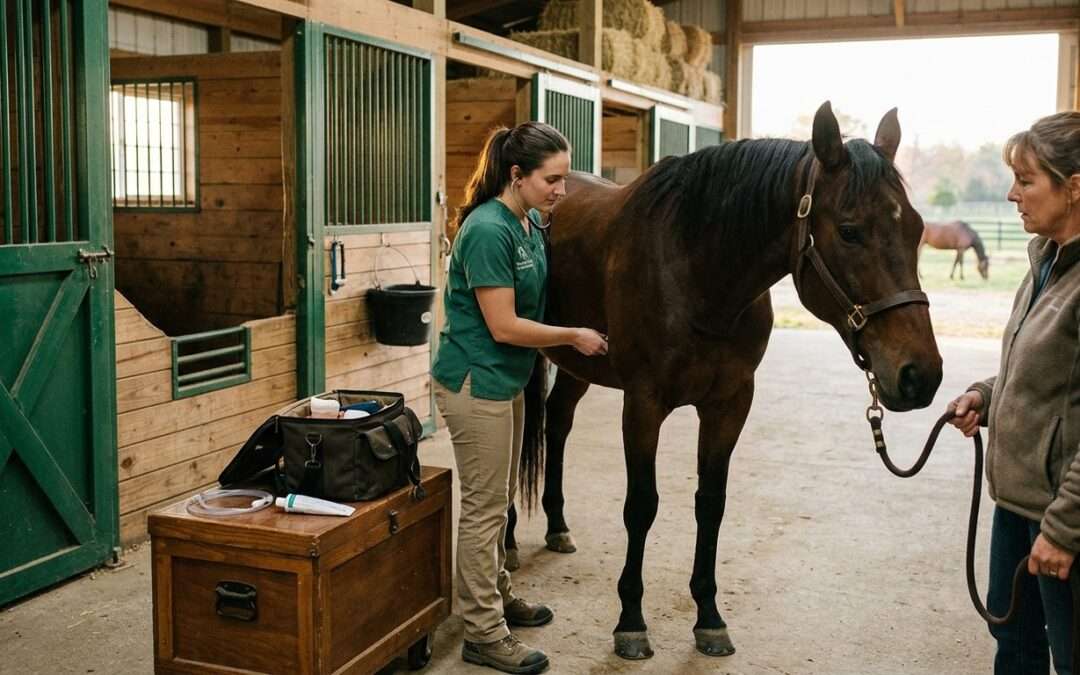
Cleveland Equine’s Ravenna veterinary clinic serves horse owners throughout Northeast Ohio with emergency and routine equine care.
Contact Cleveland Equine for:
Many horse owners maintain relationships with their equine veterinarian before emergencies occur. This means your vet already knows your horse’s baseline health and can provide more accurate assessments during emergencies.
Post-Colic Care and Management
Horses that have experienced colic once are at higher risk for recurrence. Working with your veterinarian to identify potential causes and implementing preventive strategies reduces the likelihood of future episodes.
Peace of Mind for Northeast Ohio Horse Owners
Understanding colic, recognizing warning signs, and knowing when to seek emergency care gives you the ability to respond quickly if your horse experiences abdominal distress. For horse owners in the Ravenna, Portage County, and greater Northeast Ohio area, having an established relationship with an equine veterinary clinic ensures you can access emergency care when seconds count.
Your vigilance and quick action could be the difference between a manageable situation and a life-threatening emergency.