



Your Horse’s Teeth Are Critical to Health—Professional Equine Dental Care Prevents Major Problems
Horses’ teeth grow continuously throughout their lives, creating challenges for dental health. Proper dental care enables healthy eating, prevents pain, and maintains overall well-being. Equine dentistry is a specialized field requiring professional expertise. Understanding equine dental health helps horse owners provide optimal care.
Why Equine Dental Health Matters
Efficient Eating and Digestion
Proper teeth enable horses to chew effectively, which is essential for digestion. Dental problems cause difficulty eating, leading to malnutrition. Healthy teeth ensure adequate nutrition. Dental problems affect overall health through poor nutrition.
Pain Prevention
Dental problems cause significant pain in horses. Painful teeth reduce eating and cause behavioral changes. Pain management through dental care improves quality of life. Pain prevention is a primary benefit of dental care.
Bit Acceptance
Horses with dental problems resist bits and bridles due to pain. Dental issues create riding and training problems. Properly maintained teeth enable comfortable bit acceptance. Dental health improves horse behavior and training.
Longevity and Performance
Horses with healthy teeth live longer and perform better. Dental problems contribute to systemic health issues over time. Good dental health supports longevity. Long-term health depends on proper dental care.
Prevention of Serious Complications
Dental disease spreads to neighboring teeth and the jaw. Severe dental problems require extraction or advanced treatment. Prevention through regular care avoids serious complications. Preventive care prevents escalation.
Common Equine Dental Problems
Sharp Enamel Points
Horses develop sharp points on their molars as part of normal wear patterns. Sharp points cut gums and cause pain while eating. Professional floating removes points and smooths surfaces. Regular floating prevents accumulated damage.
Uneven Wear
Teeth wear unevenly due to jaw misalignment or other factors. Uneven wear creates long and short teeth affecting chewing. Professional leveling creates even surfaces. Even wear improves efficiency.
Hooks and Ramps
Teeth develop hooks or ramps due to wear patterns. Hooks and ramps interfere with chewing. Professional trimming corrects these problems. Correction improves comfort.
Hooks on Canines
Canine teeth (tushes) develop sharp hooks, particularly in males. Hooks interfere with eating and bit acceptance. Trimming removes excess and hooks. Canine care improves comfort.
Tooth Decay and Cavities
Cavities and decay occur from disease or injury. Decay spreads if untreated, requiring extraction. Early detection and treatment prevent tooth loss. Treatment preserves teeth.
Retained Caps
Baby teeth sometimes don’t shed properly as adult teeth emerge. Retained caps interfere with eating and comfort. Professional removal helps adult teeth settle. Retained caps must be removed.
Wolf Teeth
Wolf teeth are small, sharp teeth that sometimes develop in front of molars. Wolf teeth interfere with bit comfort and eating. Extraction is straightforward. Wolf teeth removal improves comfort.
Periodontal Disease
Periodontal disease affects gums and tooth support structures. Disease causes tooth loss if untreated. Professional treatment prevents progression. Disease prevention is important.
Professional Equine Dental Examination
Visual Inspection
Professional examination begins with visual inspection inside the horse’s mouth. Professionals identify visible problems and abnormalities. Visual inspection reveals obvious issues.
Palpation
Manual palpation (feeling with hands) identifies swelling and problems. Palpation provides information beyond visual inspection. Professional palpation is thorough.
Sedation for Thorough Examination
Sedation enables detailed examination of all teeth and areas. Sedated horses tolerate thorough evaluation. Sedation allows comprehensive assessment.
Speculum Use
Oral speculums hold the mouth open for better visibility. Speculums enable complete inspection of all areas. Professional equipment provides access.
Diagnostic Tools
Dental mirrors and explorers identify problems like cavities. Professional tools reveal hidden issues. Modern equipment improves diagnosis.
Radiographs
Dental X-rays reveal problems below the gum line. Radiographs detect hidden decay and disease. Modern equine dentistry includes imaging.
Professional Equine Dental Treatment
Floating (Rasping)
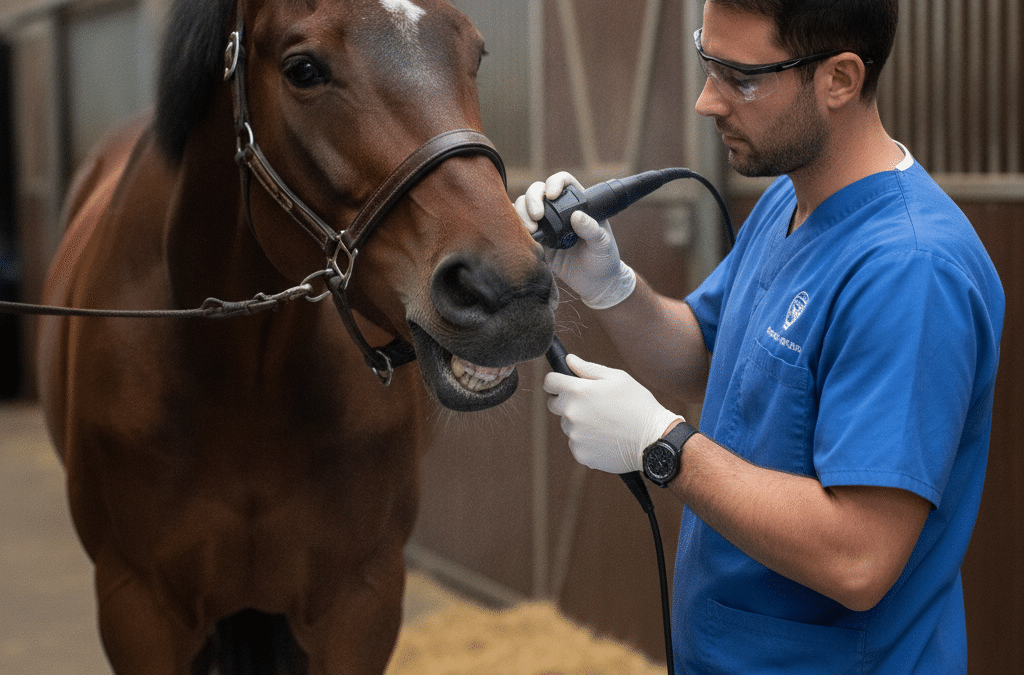
Floating removes sharp points and creates smooth, even surfaces. Floating addresses most common wear problems. Regular floating prevents problems. Floating improves comfort and efficiency.
Extractions
Severely damaged teeth are extracted to prevent infection. Extraction prevents spread of disease. Professional extraction minimizes complications. Extraction enables healing.
Disease Treatment
Periodontal and decay diseases require professional treatment. Treatment prevents progression and tooth loss. Professional care preserves teeth when possible.
Canine Trimming
Excessive canine teeth are trimmed to appropriate length. Trimming prevents hooks and discomfort. Professional trimming improves comfort.
Sinus Drainage
Dental disease sometimes causes sinus infection. Professional treatment drains sinuses and resolves infection. Drainage relieves pressure and discomfort.
Recommended Equine Dental Schedule
Foals and Young Horses (Under 5 Years)
Young horses need frequent dental evaluation during growth. Checkups every 6 months address developing issues. Young horse care establishes good patterns.
Adult Horses (5-20 Years)
Annual dental examination maintains adult horses’ teeth. Annual examination catches problems early. Annual care prevents problems.
Senior Horses (Over 20 Years)
Senior horses need more frequent evaluation—every 6 months. Senior dental care addresses age-related issues. Frequent monitoring maintains senior health.
Performance and Competition Horses
Horses in training need twice-yearly professional dental care. Competition demands healthy teeth. Frequent care supports performance.
Home Dental Care
Regular Observation
Monitor eating habits and behavior for changes. Behavioral changes indicate dental problems. Regular observation enables early detection. Observation supports professional care.
Feed Management
Provide appropriate feed types for your horse’s dental condition. Soft feed helps horses with dental problems. Feed selection supports dental health.
Professional Partnership
Work with equine veterinarians experienced in dentistry. Regular professional care is essential. Professional partnership ensures quality care.
Professional Equine Dental Care
Cleveland Equine provides professional equine dental care to horses throughout Ravenna and Northeast Ohio. Our experienced veterinarians offer comprehensive dental examination, floating, extraction, and treatment. We use modern equipment and techniques to maintain horses’ dental health and overall well-being.
Invest in Your Horse’s Dental Health
Your horse’s teeth are critical to comfort, performance, and longevity. Professional dental care prevents problems and maintains health. Don’t ignore dental signs—schedule professional evaluation today. Quality dental care keeps your horse healthy and happy for years.